
How to Check If a Dating Profile Photo Is Real
By Arthur L. · · 7 min read
Short answer
To check if a dating profile photo is real, run each picture through two or three reverse image search engines, look for the flaws AI images leave, compare the photos with one another, and check the app’s verification badge. A live video call settles what a still photo cannot.
Find where your photo was taken
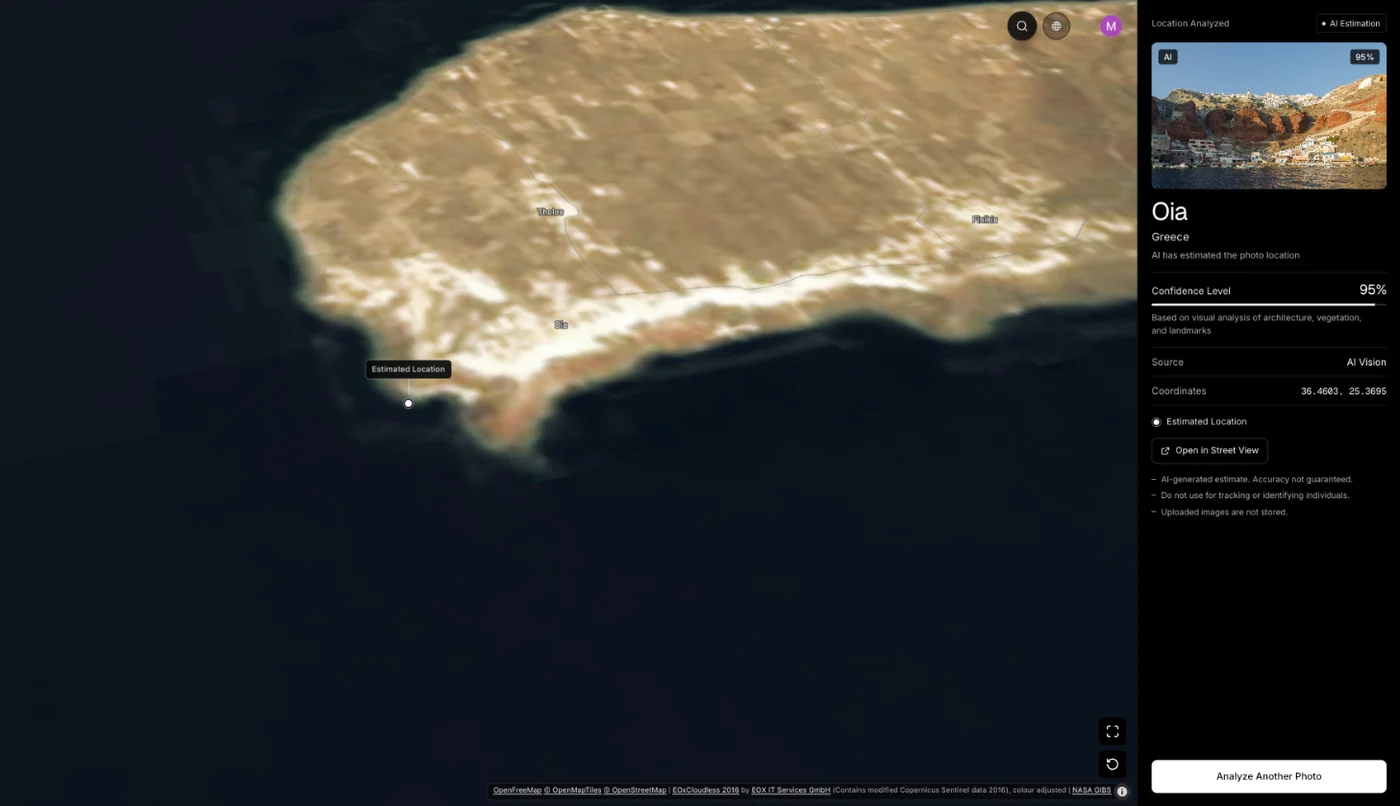
Upload a photo: GeoSpy AI reads its GPS data if it has any, and otherwise estimates the place from what it shows.
Fake dating profile photos come in three kinds: a real person’s pictures taken from their account, a model’s or influencer’s portfolio shots, and AI-generated faces. Reverse image search finds the first two, a close look finds the third, and the backgrounds show whether the photos fit the story. For that last check, an AI tool that estimates where a photo was taken reads the scene behind the face.
For any picture that is not a profile photo, see how to verify if a photo is real; to keep your own location private on the apps, see whether dating apps show your location.
How do you check if a dating profile photo is stolen?
Run each profile picture through a reverse image search. If the same photo shows up under a different name, on a model’s or influencer’s account or on a stock photo site, the profile is using someone else’s pictures. Search with more than one engine, because each indexes different sites.
The FTC gives the same advice: do a reverse image search of the person’s profile picture and see whether it is associated with another name or with details that do not match up. Search every photo, not only the first, in two or three engines; the best reverse image search tools compares what each one finds.
What gives away an AI-generated profile picture?
Look for the small flaws the FBI lists as signs of a generated image: distorted hands or feet, unrealistic teeth or eyes, indistinct or irregular faces, unrealistic glasses or jewelry, inaccurate shadows and watermarks. One flaw is a reason to look closer; several together are a warning.
The FBI’s December 2024 alert says criminals use AI-generated images to create believable social media profile photos for romance schemes and other fraud, and send generated photos in private chats to convince victims they are talking to a real person. Zoom in on hair edges, ears, earrings, hands and any text in the background. For a real photo that was retouched, see how to tell if a photo has been edited.
Do the photos agree with one another?
A real person’s photos come from different days, phones and places, yet the face stays the same. Compare ears, teeth, moles and the hairline from photo to photo, and check that ages, seasons and places fit the story.
- The face: ears, teeth, moles and the hairline match in every picture, even when the hair or glasses change.
- The timeline: the person looks the same age throughout, and the seasons fit what they tell you.
- The mix: casual snapshots with friends, pets or family suggest a real camera roll; nothing but polished portraits looks like a borrowed portfolio.
- The words: signs, menus, shirts and license plates show a language and a place that should fit the profile.
Do the places in the photos match the story?
Compare the backgrounds with the life the person describes. Someone who says they live in Ohio but whose photos all show signs in another language and traffic on the other side of the road may travel a lot, or may be using someone else’s pictures. Ask about the places.
Scammers often explain away distance: the FTC notes they might say they are living or traveling outside the country, working on an oil rig, in the military or working with an international organization. Signs, road markings, architecture and plants test such a story (country clues in photos). The file will not help: a screenshot carries none of the original’s metadata, and apps that publish photos usually strip it (which apps strip EXIF data).
What do Tinder, Bumble and Hinge verify?
Each app compares a selfie taken in the app with the profile photos and adds a badge when they match: a blue checkmark on Tinder and Bumble, a Selfie Verified badge on Hinge. The badge shows the person looks like their photos; Hinge says it does not confirm a name, age or other identity details.
| App | How it checks | Badge | Worth knowing |
|---|---|---|---|
| Tinder | Selfies matched to the profile photos; Face Check adds a video selfie of a real, live person | Blue checkmark (Photo Verified) | Face Check is rolling out in phases, where local regulations permit |
| Bumble | A selfie check against the profile photos; ID verification adds a government ID and a live selfie | Blue checkmark; a separate ID badge | Ask a match to verify: three dots on their profile, then Request Photo Verification |
| Hinge | A video selfie, a liveness check, then a match against the profile photos | Selfie Verified | Voluntary; confirms the face, not the name or age |
No badge is not proof of a fake: Hinge’s check is voluntary, and Tinder’s Face Check is still reaching new regions.
Is a video call enough to prove a match is real?
A live video call is the check Tinder and Hinge both recommend before meeting, and refusing one is a red flag. It is not proof on its own: the FBI warns that criminals generate video for real-time chats, so watch for lag, a voice that does not fit and unnatural movement.
Tinder says to be wary of anyone who will not meet in person or talk on a phone or video call; Hinge says a match who only wants to text is probably a red flag. Ask for something unscripted during the call, such as a wave. A clip sent in chat counts for less, because the FBI says criminals create videos to “prove” an online contact is a real person.
Can AI tell where a dating profile photo was taken?
It can estimate it. GeoSpy reads the GPS position from the file when it has one; without GPS, an AI model estimates the place from what the photo shows and returns a location with a confidence score on a map. For a profile picture, the estimate is about the backdrop, which you can compare with the story.
The estimate matters most when it clashes with what you were told: if a match says they live in Denver and every backdrop comes back as a coast in Southeast Asia, ask about those trips. For what such a model reads, see how AI geolocation works.
Frequently asked questions
- How do you do a catfish reverse image search on a phone?
- Screenshot the profile, crop it to one photo and upload it to Google Lens, Bing, TinEye or Yandex. Reverse image search on your phone shows the steps for iPhone and Android.
- What does it mean if a reverse image search finds nothing?
- Only that the photo is not on the pages that engine has indexed. Many real people post little in public, and an AI-generated face has no earlier copy, so move on to the other checks.
- Is a verified badge proof that a dating profile is real?
- It shows that the person who took the selfie looks like the profile photos. Hinge says its badge does not confirm a name, age or other identity details, so keep checking the story.
- How do you spot a fake dating profile besides the photos?
- Watch the behavior. The FTC says romance scammers claim they can’t meet in person, and Hinge warns about matches who want to move the chat off the app, offer crypto or investment advice, or need money for a visa, medical bills or plane tickets.
- Where do you report a fake dating profile?
- Report it in the app so it can be reviewed, and to the FTC at ReportFraud.ftc.gov if you were asked for money or lost any. Fakes are not limited to dating apps: nearly 60% of people who reported losing money to a romance scam in 2025 told the FTC it started on social media, where $298 million was reported lost to such scams.
Sources
- Reported losses to scams on social media eight times higher than in 2020 — Federal Trade Commission (Data Spotlight)April 27, 2026: nearly 60% of people who reported losing money to a romance scam in 2025 said it started on social media; $298 million was reported lost to those scams.
- What You Need to Know About Romance Scams — Federal Trade Commission (Consumer Advice)A reverse image search of the profile picture, the stories scammers tell about living far away, and reporting to ReportFraud.ftc.gov and to the app.
- Criminals Use Generative Artificial Intelligence to Facilitate Financial Fraud — FBI Internet Crime Complaint Center (IC3)December 3, 2024: AI-generated profile photos and videos in romance and other fraud, and the imperfections to look for.
- Protect yourself and other daters from scammers on Hinge — Hinge Help CenterWhat the Selfie Verified badge does and does not confirm, video chat as a screening tool, and the money requests to report.
Keep reading
How to Verify if a Photo Is Real
Three separate questions hide inside "is this photo real". A verification order that answers each one, and the checks that fail more often than people expect.
· 4 min read
The Best Reverse Image Search Tools, Compared
Google Lens, Yandex, Bing and TinEye do different things. A comparison of what each engine is good at, and when to reach for AI geolocation instead.
· 6 min read
Dating Apps Can Leak Your Location. Researchers Showed How
Do dating apps show your location? Tinder, Bumble and Hinge show a distance or area, but researchers made 6 of 15 apps leak a near-exact spot. What to change.
· 12 min read
Your Photo Edits Can Leave a Trail. A Royal Photo Showed How
A royal photo pulled by news agencies had two Photoshop saves in its metadata. Six checks that show if a photo was edited, and what your own edits reveal.
· 12 min read